


All about Gradings
Life is like a mountain - no matter how many times you climb, no matter how many times you reach a summit, there is always another mountaintop yet unclimbed, calling your name too.
What is a Grading?
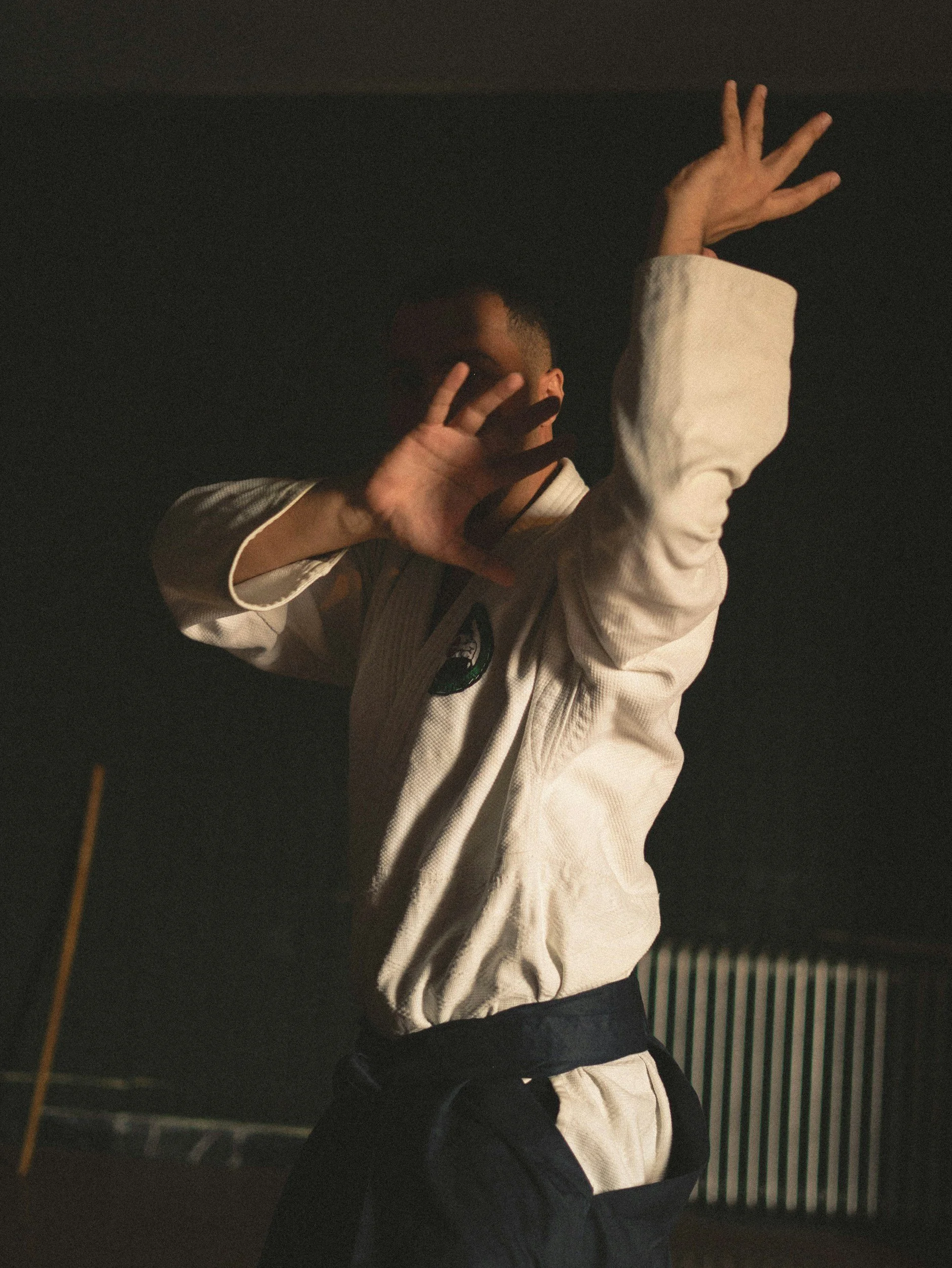
A grading is a recurrently scheduled testing day for martial arts students. Gradings allow students to present themselves and their progress in the martial arts as developing student.
Gradings take place with students from both their own class, and other classes, as a new stimulus, and challenge. Having to perform their karate in front of unfamiliar faces, parents, black belts, etc. is all part of the martial arts training.
Formally speaking, gradings are an assessment of the student’s progress on the facets of the martial arts - technically and objectively, but also on their progress on the intangible elements of their training such as demonstration of focus, discipline, commitment, etc. The student may be tested on any or all of the below components of their martial arts training as part of the assessment process. Learn more about these components in the guide - all about karate
Warm-up
Basics
Kata
Self defense
Kumite / Rendori
Vocabulary & martial arts knowledge
Parent report card (children and teens)
Written test (adults)
Gradings can result in either a pass (promotion to the next rank), a re-grade, or a probation depending on their performance in the grading itself, and their performance leading up to the grading.
Students are graded based not only on their performance in class, and in the test itself, but in their performance, actions, and behaviour outside the dojo as well. Each student testing receives a parent report card to be completed by parent/guardian in advance of the grading. I encourage parents to complete these forms honestly, providing their feedback on how their child is performing at home and at school in addition to their martial arts training. The point of a grading is not for your child to “get to the next belt”, but a process of the student growing, developing, and changing who they were, to become a better, more mature, responsible, and capable version of themselves in the future - giving back to their family and society at large. An honest assessment on parent report cards is essential to this process.

Who are Gradings For?
Students in both karate and kobudo will all eventually challenge and complete a grading. This means whether you have been training for 6 months, 6 years, or probably even after 16 years of training, you will still be working towards your “next grading”. Students with colour belts and black belts both participate in gradings, although black belt gradings are a little different (black belt grading guide coming soon).
Gradings as a metaphor for life
Each student benefits from the challenges presented in preparing for a grading. It focuses their efforts on a desired goal, and gives them something to strive for in the short term (aka “my next belt”) and long term (aka “become a black belt someday”). This appropriately orients their efforts in pursuit of a better future, and gives them something to look forward to.
Every adult knows that life is full of challenges - both expected, and unexpected. Gradings are a metaphor for life in that sense, being both a challenge with some expectations, and some unexpected variables. a life of no challenges, is a life where the student is missing out on an opportunity to become who they were meant to be. Yes, not having challenges (or goals) in the short term makes life “comfortable”, but that short term comfort is traded in exchange for a possible loss of drive, ambition, and meaning as they work towards adulthood - where a sense of belief and confidence in oneself are essential tools to give one’s life purpose and meaning as they work towards their sense of “self perfection” and self understanding.
So yes, a grading will be a challenge, and yes, it will make the student have some momentary discomfort and nervousness in pursuit of the unknown - that’s the whole point, a replica of the future challenges they will face throughout the rest of their lives.
Think about the things in life that we assign value to - it tends to be the things we worked hard to achieve, and earned. While the things given to us, less so no matter the cost.
I sometimes have students return to training in the martial arts after a long hiatus - life, school, etc. “gets in the way”, yet something in their heart calls them back to their training. I often get asked “Sensei, do I get to keep my belt, or do I need to start again?”. My answer is simple - “you earned that belt around your waist, it is up to you to find the person again who earned that rank”. A grading is a metaphor for this hard word, leading to a desired end result - no different than day to day life. Working hard to prepare for a grading, training, practicing, and going through the process of slow sequential improvement in pursuit of a new rank is extremely valuable. why is it that you do not simply tie a new piece of cloth around your waist and call yourself “a black belt”, when you easily could? It is not the result of the grading that is meaningful, but the effort in and of itself in pursuit of a goal that makes the "“new” piece of cloth around your waist valuable to you, not the cloth itself.
Why are Gradings Important?
How Gradings Work
Students and families will be informed of the grading schedule for the calendar year in class.
You can check the gradin schedule as posted in the dojo schedule
Students are recommended for a grading based on a combination of:
Their number of training hours
Level of competency of the curriculum required for their level
Their tangible and intangible progress since their last grading
their performance in the dojo, at school, and at home
Their own internal desire to test/challenge for their next rank.
Recommended students will receive an email with the grading date, time, and logistics.
In advance of the grading, students and families will need
to complete and return the parent report card for their child
OR their written test for adult students
Learn more about why we use parent report cards here (coming soon)
Pay the grading registration fee
Grading Day
Grading Results (~1 week later)
In class promotion for promoted students (~1 week after the results)
Why the wait? - learn about the importance of the martial arts virtue of patience here (coming soon)
How does the promotion process work? Learn more here (coming soon)
Grading Preparation Guide
In order to prepare for a grading, students need to consider the following regarding their own training:
How often am I attending class?
How often am I practicing outside of class time?
Do I have a practice routine for my times at home/outside the dojo?
Am I confident (can present independently without guidance) for the curriculum content I am responsible for?
How am I behaving, comporting myself and performing outside the dojo?
I am constantly in contact with my students in class to let them know months ahead of time how they are tracking towards their “next grading”. This transparency is my way of ensuring there are “no surprises” when they are or are not ready for the next upcoming grading. The student’s effort inside and outside the dojo are monitored each week, and their progress is noted. Students should really “always” be in grading preparation mode, aka training for their next objective, whether they just completed a grading or they are 1 week away from their next one. This seriousness of intent keeps the student focused on the positive and productive questions outlined above as they strive to improve themselves each day, week, month, and year by their training in the martial arts.

A Parent’s Guide to Spectating a Grading
When your child has been recommended for a grading, parents and family will be invited to the event to spectate. The following information will help parents understand their role in this process and what a grading will look like.
What the grading process looks like for a parent:
You will receive informal updates on your child’s progress in their training periodically. I will ask about their behaviour and performance outside the dojo periodically
When recommended, your child will receive a formal grading recommendation sent to you via email. This will contain grading logistics, the parent report card, etc.
In advance of the grading please complete and return
Parent report card (online)
Grading registration fee
On the day of the grading, please have your child in their full gi (jacket, pants, belt). Your child will be brought into the dojo per usual. Please remove your shoes (if able) and have a seat in the area provided.
While spectating, I ask that spectators remain quiet so the students can concentrate, and that no photos or video are taken until the time that your child is on the floor independently
The grading will conclude (~90min) and students will be dismissed
Students begin the 1 week waiting process for grading results.
Outdoor Grading Particulars
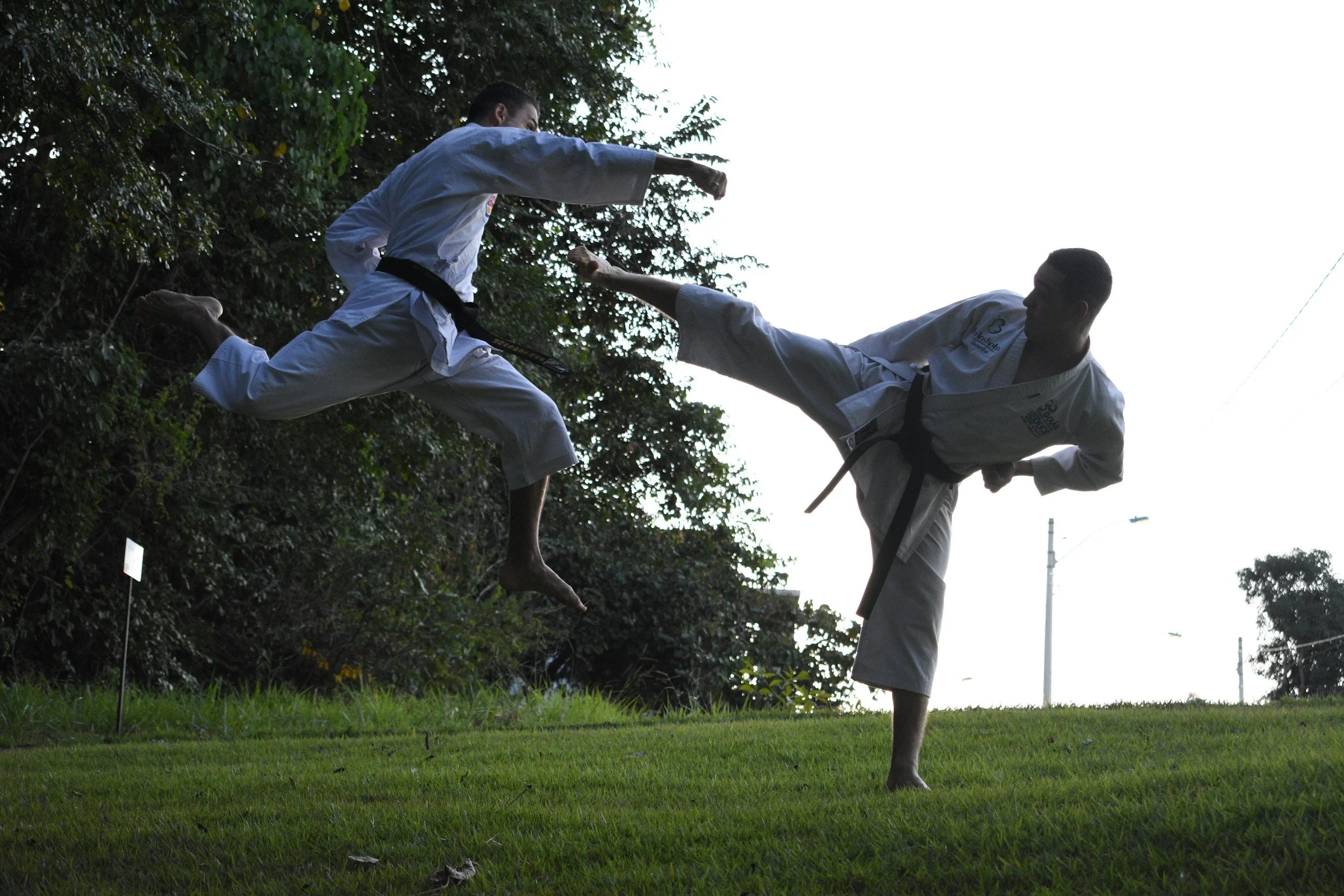
Sometimes I will host our gradings outside to take advantage of the nice weather and as a news training stimulus for students! This has been a great success since 2019.
Logistics and location particulars for upcoming outdoor gradings are posted here for students testing
Outdoor Grading Uniform Details:
Please have your child in their gi bottoms and belt at the very least.
If it is cold when we start, a hoodie/sweater is ok for upper halves. If it’s hot, of course, dojo t-shirt is acceptable instead of the full gi jacket.
Athletic shoes are always best for the grassy area, bare feet per your family’s preference, but please be mindful if it rained or is scheduled to, as grass gets slippery!
Frequently Asked Questions
-
Yes! Gradings are the only times I allow parents to watch their children perform their martial arts. Reasons for this are outlined in the student textbook.
Bring as many family members as you like to watch the grading process.
-
Most gradings are 60min-75min based on the number of students testing.
-
I ask that parents reserve their photos for times when only your son/daughter is on the floor.
Children perform differently when they know they are being recorded/photographed, and I am looking to avoid the privacy issues of a family recording/taking photos of other people's children during the group elements of the test.
You are more than welcome to take a photograph with me and your son/daughter after the grading for your family photo album
-
Promotion does not happen on the day of the grading. This is the most common question I get asked by parents.
Promotion is intentionally scheduled at a later date as a lesson for the student in the martial arts virtue of patience. Promotion dates are set and emailed out about a week after the grading. Promotion is a 15min event, usually at the same location as the grading.
-
After a grading, the results are sent out by email to families with students testing
For students who have been promoted, I set aside the last 5-10 mins of class depending on the number of students who were promoted
Parents are welcome to spectate and take pictures of their son/daughter during the promotion
Parents please leave your shoes (if you are able) at the door to the dojo please and thank you
Students are to arrive in their full gi wearing their previous colour belt
If parents would like a photo with me and their son/daughter after class, they are more than welcome
If your student has a parent report sheet where any category was marked as "FAIR" or below, the parent will need to re-assess their child's performance in each of those categories
-
Not typically - please be prepared to stay for up to 2 hours if needed. There is a bathroom on site at the dojo but no water fountain.
Please do not eat in the dojo while spectating the grading.
-
Do not turn your back on the black belts
do not draw blood
retain your composure