

Tools that let us measure progress and train with clinic fidelity
Clinic‑grade testing and practical tools we use to deliver measurable, repeatable rehabilitation at home or on the road.
Tools that power measurable rehabilitation
Rehab Blueprints & Hotel Cards
Every visit becomes an actionable, filmed at‑home plan delivered within ~72 hours so clients always know what to do next. The Card pairs short technique clips with prioritized progressions and exact metrics to remove guesswork.
Strength & Baseline Testing (VALD)
Clinic‑grade isometric and dynamic testing that gives normed, sensitive outputs so small, meaningful gains are visible and defensible. Useful for baselines, return‑to‑sport and objective progression decisions.
Clinical Rehab & Athletic Performance Management (PowerDot 2.0)
Clinician‑programmed NMES for targeted neuromuscular re‑education, pain modulation, and load management that fits into progressive rehab and event preparation plans.
Clinic Grade Tools we use on the road
-
Self‑release and targeted soft tissue work. We use targeted self‑release tools to break down focal adhesions and reduce soft‑tissue pain quickly between sessions.
Use: focal soft‑tissue work, trigger point desensitization.
Benefit: low‑tech, high‑impact adjunct to coached exercise.
-
Short‑term mechanical support to improve load tolerance while retraining movement patterns.
Use: proprioceptive cueing and temporary load redistribution.
Benefit: immediate functional support for progressive exercise.
-
A clinician‑only tool that safely transfers force for pelvic and lumbar mobilizations when hands‑on leverage is required.
Use: higher‑force mobilizations with client safety.
Benefit: effective manual correction while protecting clinician biomechanics.
-
Connect live with your trainer—anytime, anywhere.
Seamless video sessions for business trips, vacations, or home when you can’t have us there.
Ensures you never miss a beat as you climb your health and fitness mountain.
-
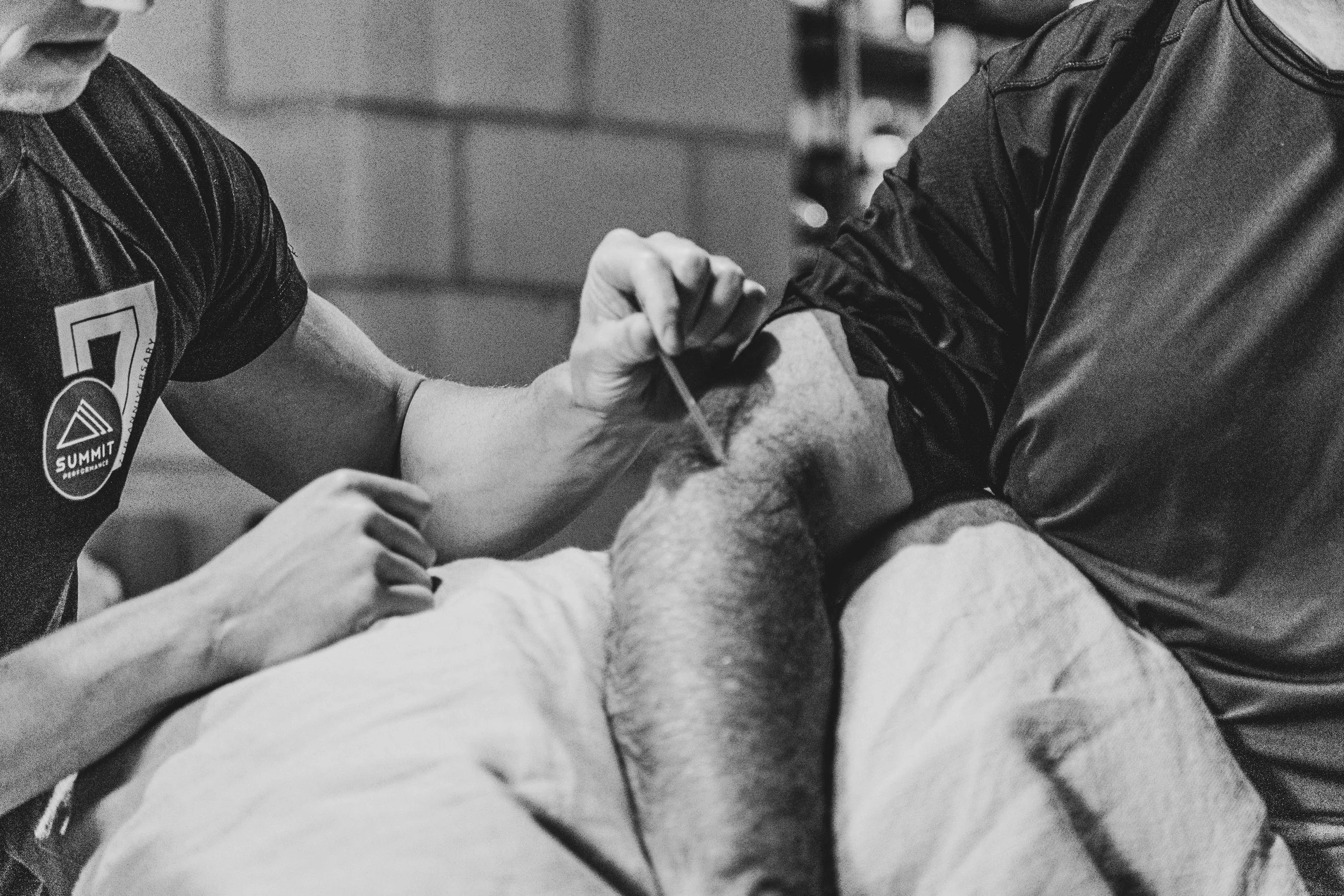
Single‑use sterile needles, sharps disposal, and prep supplies used where dry needling/acupuncture fits the plan.
Use: trigger point release; pain modulation protocols.
Safety: single‑use needles and clinician sharps protocol.
-
Heart rate, pulse oximeter, workload, movement sensors, game ready compress machine for sport/event prep.
-
Basic, travel‑friendly tools we prescribe for scalable at‑home progressions and Hotel Card exercises.
Use: progressive strength and motor control drills.
Benefit: consistent home adherence with minimal equipment.

Turn every visit into a clear, filmed, prioritized at‑home plan delivered within ~72 hours after your session. Unique and customized for you. Secured and private with next generation blockchain technology.
Rehab Blueprints & Hotel Cards Overview
What it contains:
3–6 short technique clips showing correct form and common mistakes.
One prioritized “do this first” exercise and 1–2 progressions.
Exact metrics: reps, sets, tempo, daily pain tolerance limits.
Short written cues and modification notes; equipment list.
Version history and update notes after treatment visits.
When you get it:
Delivered after the assessment Session; updated after treatment Sessions.
Turnaround: typically within 72 hours of the session that generates the change to the contents of your “rehab card”.
it’s yours to keep, so use it to keep using it independently!
How we use it:
Reinforce in‑session coaching with filmed references that reduce technique drift.
Track adherence and adjust progressions based on objective measures recorded each visit.

Strength & Baseline Testing (VALD)
Next generation baseline testing - portable, and ready for you
We use VALD Dynamo and portable dynamometry to capture reliable strength snapshots across key muscle groups and movement patterns. Results are normed and trended so clinicians and clients can see percent improvements, limb symmetry indices, and session‑to‑session sensitivity that inform load prescriptions and milestone decisions. VALD data integrate directly into progress notes and help set measurable, time‑bound targets.
What it measures:
Peak isometric force and rate of force development.
Limb symmetry and side‑to‑side comparisons.
Session‑to‑session trends and percent change. How we use it (2 bullets):
Set objective clearance criteria for staged return to sport or work.
Detect small, early improvements that justify progression or indicate need for regression.
How we use it
Set objective clearance criteria for staged return to sport or work.
Detect small, early improvements that justify progression or indicate need for regression.
Track joint‑level ROM alongside strength so we can separate mobility limits from force deficits and target interventions precisely.

Sample Test Battery for an athlete
Clinical Rehab & Athletic Performance Management (PowerDot 2.0)
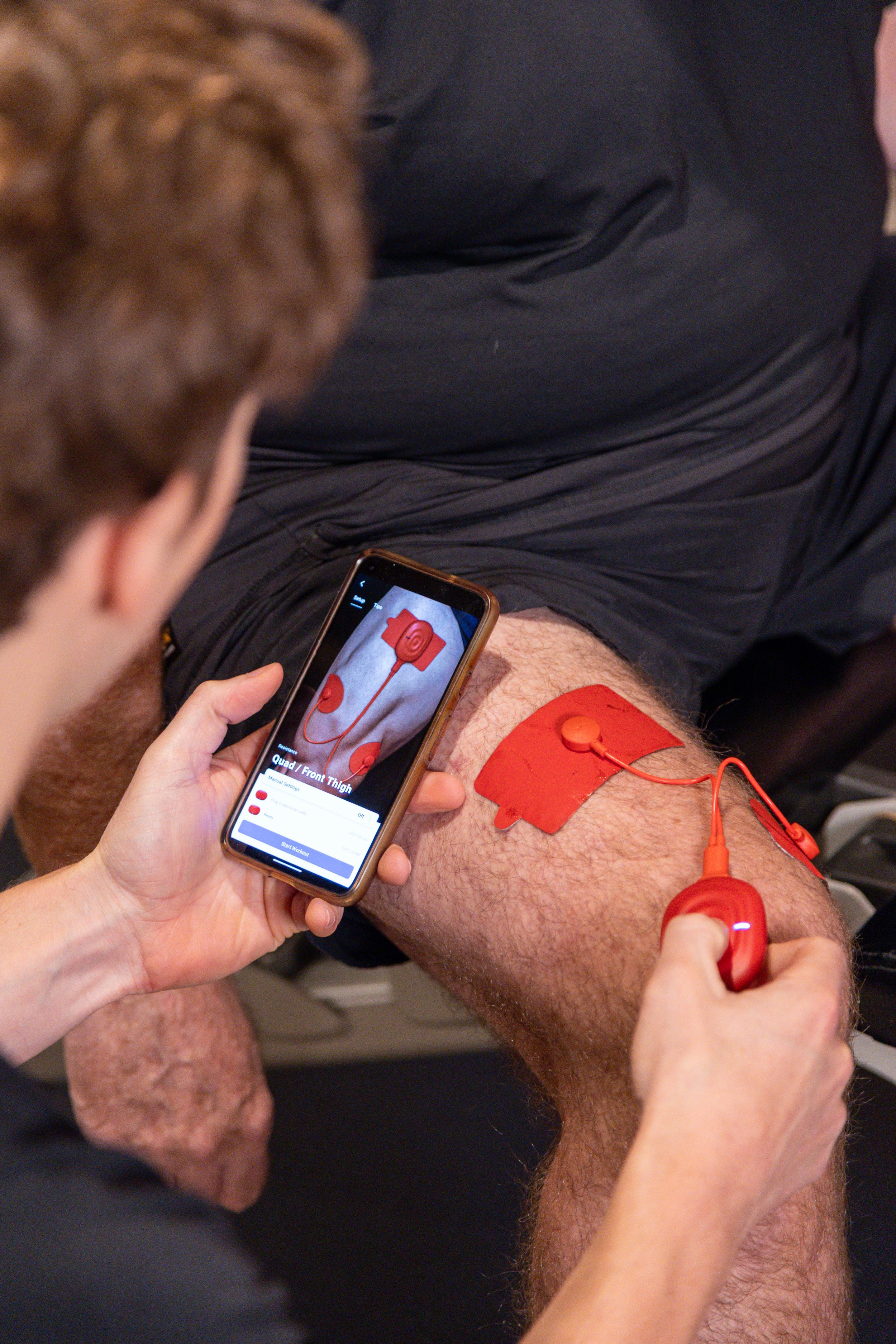
PowerDot 2.0 lets clinicians remotely program evidence‑based NMES and TENS protocols to supplement exercise‑driven rehab. We use it for targeted muscle activation, edema/pain control, and as part of taper or recovery protocols for athletes. Combined with objective testing and the Rehab Blueprint, PowerDot protocols are integrated into the client’s progression plan and recorded in session notes for repeatable dosing.
Typical protocols and benefits:
Activation protocols to restore recruitment in inhibited muscles.
Low‑intensity analgesic protocols to support early loading.
Recovery/taper protocols to accelerate transient recovery around events.
How we use it
Clinician‑managed dosing tied to objective test results and session goals.
Used selectively where neuromuscular deficits, pain modulation, or rapid return‑to‑play windows justify adjunctive NMES.
Physio Tools in Action: Mini Case Study
Here’s how we use our tools to help a young athlete recover confidence, strength, and movement after an ACL injury.
You’ll get one clinician who guides the whole plan, clear at‑home videos to practice with, and simple tests that show real improvement. We combine hands‑on care, targeted muscle stimulation, and filmed exercises so you know what to do and why it’s helping.
What the problem looked like
After the surgery the knee felt weak, swollen, and the client couldn’t fully straighten or confidently walk without limping. Everyday tasks and simple exercises felt hard and frustrating.
What we did
We focused first on reducing pain and swelling and helping the quads wake up so the client could stand and walk more normally.
We used short, guided electrical stimulation sessions when needed to help the weak muscles turn on.
We filmed a few short exercise clips in clinic and sent them to the client so they could practise the right way at home.
As strength and confidence improved, we moved to more challenging exercises and gradual running drills, checking progress with quick strength and movement tests.
Tools we used
Powerdot muscle stim — a portable clinic grade muscle stim device that helps a “sleepy muscle” start working again during practice.
VALD Dynamo — a quick strength test that shows how much force the injured leg can make compared with the other side.
Short filmed exercises — 3–6 short video clips that show the priority exercise and the “do this first” move to practice at home.
Dry needling/acupuncture (only if helpful) — used sometimes to ease pain so the client can train more effectively.
What changed & real‑world results
The client walked more normally and could do daily tasks without needing extra rest.
Strength improved enough to move safely into running and sport drills.
The client felt more confident because they could see progress on simple tests and had clear at‑home guidance.
Why this helped
Short videos on his hotel card, customized to the client kept home practice accurate and easier to stick to.
Objective tests showed small gains so we knew when to safely increase activity. The client was motivated by really SEEING his progress as it happened
One clinician managing the plan meant consistent advice and faster adjustments when needed.
Want to see a sample Rehab Blueprint for an ACL arc or request a tool demo?

Operational FAQs
quick answers clients ask most often
-
We record customized exercise overview videos for each client, package them into a Rehab Blueprint (Hotel Card), and deliver a private, tappable card the client accesses on their phone.
-
No. Rehab Blueprints are created by your clinician for your personal use and are delivered privately; no separate consent form is required to receive them.
-
Only you and your care team have access. The Rehab Blueprint is private to the client; it is not published or shared publicly without your explicit permission.
-
Blueprints are updated whenever your plan changes. Clinicians push new clips or plan edits to a dashboard on our side and the client’s Card is refreshed so the latest program is always available.
-
Recorded videos and objective test outputs are stored on secure systems accessible only to your care team. We do not share your media or clinical data without your explicit permission.
-
Yes. Single‑use sterile needles and consumables (alcohol wipes, cotton) are provided and disposed of following sharps‑waste protocols.
-
No. All of our physiotherapy tools are provided as a part of our full service physiotherapy offering for our client base.
-
Devices are transported in protective cases and checked or calibrated per manufacturer guidance before testing. Major verifications are logged in the clinical note when relevant.
-
Yes. Request a Tool Demo or sample Rehab Blueprint via the physiotherapy inquiry form and we’ll send example outputs and explain what a series of sample charts and clips could mean if they are applied to your care.
-
Your assigned clinician is the primary contact for tool explanations and result interpretation. To schedule a demo with one of our tools, use our physiotherapy inquiry form.