

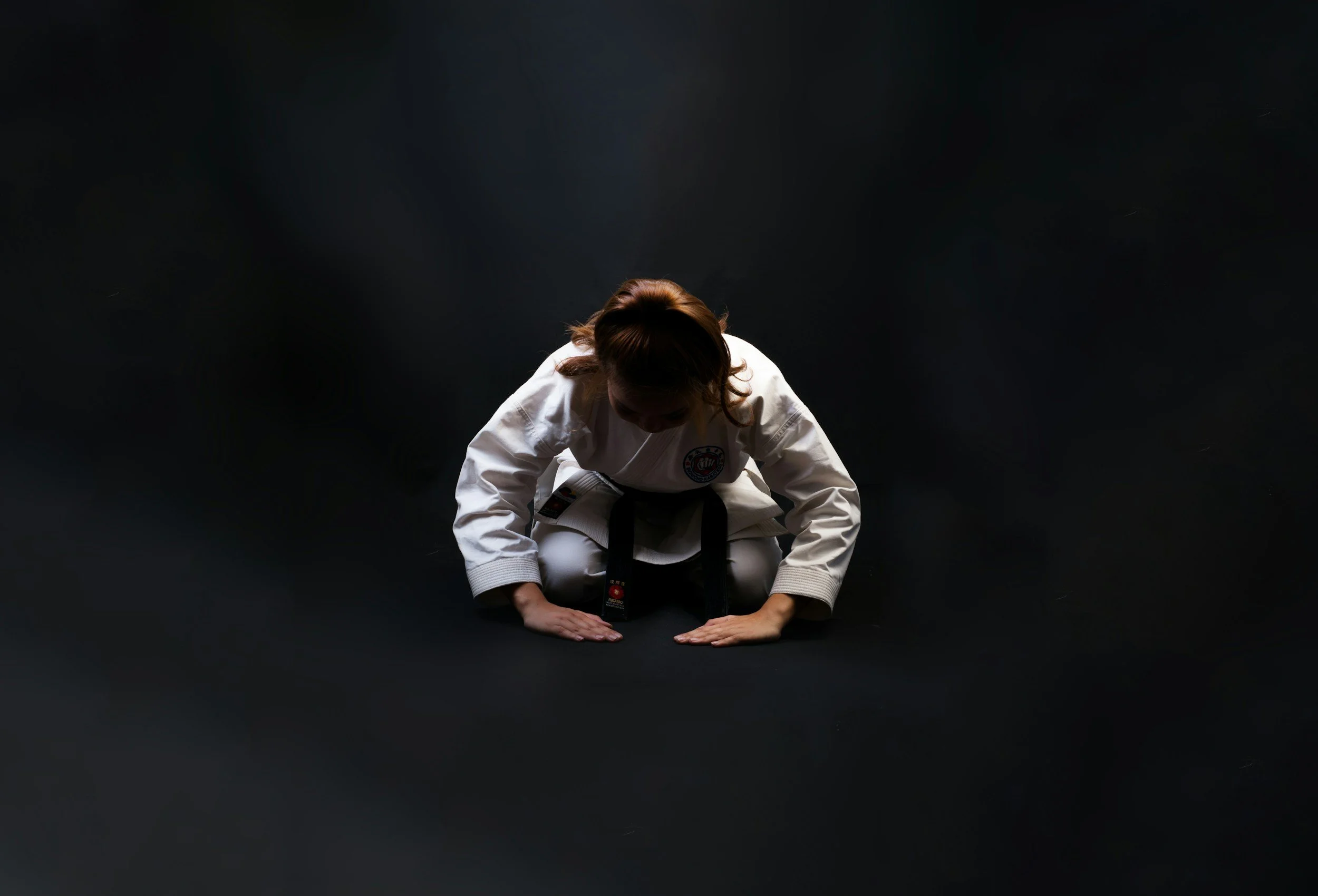
All About Goju Ryu Karate-Do
According to Sensei Peter Urban, when it comes to karate training, there are 3 types of practitioners - punchers, kickers, and “dancers”.
That’s the beautiful part about martial arts - it’s not just science, it’s not just art. It’s the combination of martial science + art that gives each student the ability to express themselves - their art - through the combination of their interest for either the scientific and technical/mechanical, or the artistic side of training. Each student brings their own skillset and underlying predisposition to the dojo that helps them form themselves as a karate-ka today and into the future.
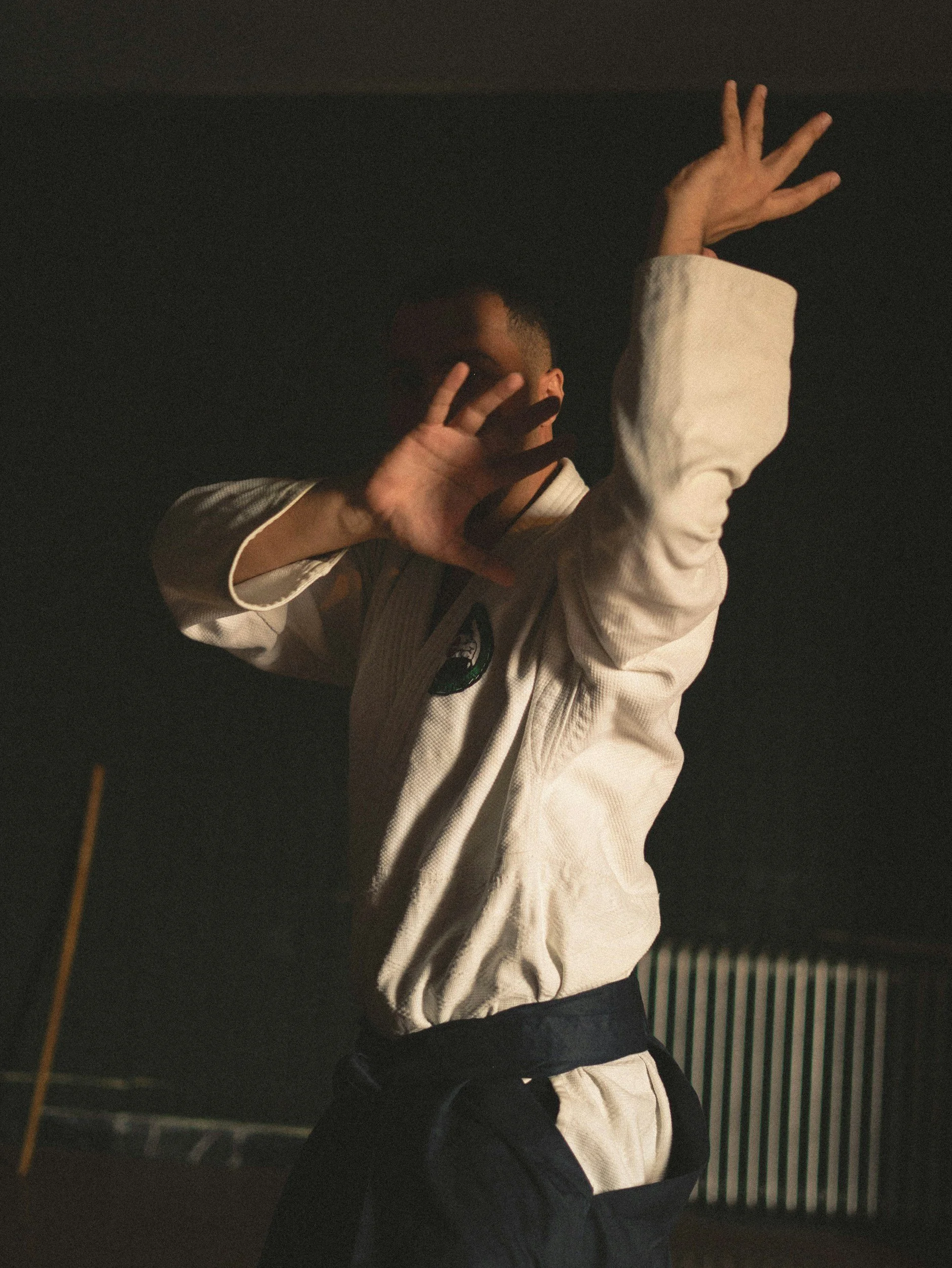
What is Karate-Do & What is Goju Ryu Karate-Do?
I save the full history of the martial arts broadly, and of Goju for each student’s own exploration as they mature with their training. You could spend hours investigating and reading into the history of Karate, through it’s ancient origins in China, through it’s more “modern” history in Okinawa, Japan, and post world War II into North America.
Goju Ryu is considered one of the primary branches of karate-do (空手), founded my Chojun Miyagi. Students who visit Okinawa and see his grave will see a beautiful monument about the importance of Miyagi Sensei to the dissemination of karate from Okinawa to the rest of the world. Much of the fundamental techniques and principles are still taught and trained by Goju Ryu practitioners today as a method of self defense, and enhancing one’s life through training in the martial arts.
Karate-do fundamentally means “the way of the empty hand”; Goju Ryu being the “hard soft style”. I offer my students ample resources and reading material for those looking to delve deeper into the history of Goju Ryu or karate-do broadly.
Kihon (Basics)
Each student learns the basic techniques, the building blocks, used to learn more intricate techniques, kata etc. Regular practice of the basics promotes a strong foundation on which a more advanced understanding of the art can be built. Basics consist of:
Blocks
Punches
Kicks
Stances
Strikes
Breathing Techniques
Kata (Patterns & Forms)
Kata is the essence of karate-do. The techniques learned in the basics are implemented into a pattern to help the student learn (from a practical perspective) how to use the techniques of karate to defend oneself. As the students advance, they will be guided through ever advancing levels of understanding and practice for the kata, which will serve their training for the rest of their life. Kata are to be practiced, and with the same attitude one takes for eating, sleeping, brushing your teeth, etc, such that competency and fluency is developed through thousands of meaningful repetitions, such that something that was once conscious, becomes unconscious and automatic. Creating a practice routine to ensure uptake and retention of kata content are paramount to their karate training. The longer a student trains, the more they can not just learn about the art of karate, but themselves - as kata is a never-ending cycle of seeking an ever more perfect form. An impossible journey worth taking. Those students who delve deeply into their own kata training can become the “dancers”, the ultimate artists of karate-do Sensei Urban was referring to in classifying martial arts practitioners.
Students have particular curriculum requirements based on their age and rank in order to prepare for a grading. See curriculum requirements here. Students begin by learning kime no kata - basic patterns, then with age and experience will delve into kata from other styles of karate to help them enhance their understanding of how other martial arts approach the same “problem” of self defense.
Self Defense, Kumite (Sparring), and Bunkai (Application)
Every technique taught in the karate program has practical self defense application. Self Defense, Kumite, and Bunkai are the tools we use to educate the student on how their technique carries over into the “real world”, facilitating them to protect themselves if needed. Self defense techniques are taught in drills - to build skills, which then transition into more dynamic and “real” self defense situations with age, skill, and experience in both kumite and bunkai.
By learning in this way students can see and “translate” their learnings from the basics, into practical applications allowing them to confidently defend themselves should they ever need to in “real life”.
For kumite, the intention is to have students replicate the “reality” of having to block a punch, kick, etc. in a self defense situation. For that reason, while we expect students to bring and use a mouth guard for kumite, we do not encourage the use of gloves, pads, etc. Students and trainees act differently if they know a potential unguarged attack “won’t hurt”. That can create bad habits if trained repeatedly.
Physical Conditioning & Contact Training
“Make the body of the martial arts the everyday body the everyday body a body made for the martial arts" - Miyamoto Musashi (The Book of 5 Rings)
Physical conditioning of the body is part and parcel of self defense and requires the student to steel themselves and their body should they be placed in a self defense situation and need to rely on their training to protect themselves. This implies both independent conditioning of the body and partner based work where the student perform drills, to build the skills and confidence to defend themselves and trust their body should the time arise.
Partner based work may consist of forearm training to build resilience in blocking, distance and timing training where the student learns a sense of space, timing, etc against oncoming attacks, kicking punching a bag to learn what impact feels like, and partner based resistance training, where the other student acts as a dynamic form of resistance. These drills are very much aligned with the requirements of what the student would face in a real self defense situation and allow them to build functional physical skills, strength, and conditioning consummately aligned with making their “everyday body” a body “made for the martial arts” as Miyamoto Musashi so eloquently stated.
Meditation, Philosophy, and the Martial Arts Virtues
"Surpass today what you were yesterday, go beyond those of poor skill tomorrow, and exceed those who are skillful later." - Miyamoto Musashi (The Book of 5 Rings)
Martial arts training is not just physical, with the other 2 components being mental and spiritual. One invested only in the physical training only is not training in the martial arts, and equivocally speaking a purely academic pursuit of the intellectual facets is akin to reading a book on how to swim, but having never jumped in the water. Meditation, philosophy, and learning the martial arts virtues are the elements that comprise the mental and spiritual components of the training.
Understanding how to re-focus, ridding oneself of the shackles of our modern digital distraction prison is but one benefit of meditation. Moving meditation through kata training is another way to “meditate” with similar far reaching benefits. Understanding the philosophical principles and virtues of martial arts with courtesy, respect, discipline, compassion help create not just modern day moral upstanding individuals who can comport themselves successfully, but individuals who - through martial arts training do not become the monsters themselves they are training to defend themselves against.
Learn more about the benefits of meditation for you and your child in this article based in modern neuroscience.
Elements of Karate-Do Training
Frequently Asked Questions
Coming Soon!
-
Please see this section of the page
-
coming soon!
-
please bring your mouthguard to each class.
More information coming soon!
-
coming soon!